

Franz Cell Permeation Assays: Choosing the Right Membrane for Your Formulation
A vertical diffusion cell is the standard instrument used to measure passive diffusion of an active compound across a barrier under controlled laboratory conditions. The design places a formulation in direct contact with a membrane, allowing molecules to move from a region of higher concentration toward a region of lower concentration without any mechanical assistance. This passive transport mechanism forms the basis of nearly every topical and transdermal evaluation performed in pharmaceutical and cosmetic development.
The basic setup consists of two chambers separated by the membrane itself. The donor chamber holds the test formulation, whether a gel, cream, solution, or patch, while the receptor chamber below contains the receptor medium, typically a buffered solution maintained at a fixed temperature. Samples are withdrawn from the receptor chamber at set intervals and analyzed to quantify how much active substance has crossed the barrier.
A permeation study or diffusion study exists to track permeant transport over a defined time course, producing data points that describe how fast and how much of a substance moves through the membrane. Formulation scientists rely on these outputs to compare vehicles, screen candidate formulations, and support regulatory submissions with quantitative evidence of dermal or transdermal behavior.
Why is membrane selection critical in diffusion studies?
The decision to choose the right membrane directly shapes every mathematical output generated from a Franz cell run. Steady-state flux, lag time, cumulative permeation, and the resulting permeability coefficient are all calculated from the raw concentration-versus-time data, and each of these values shifts depending on the physical and chemical properties of the barrier membrane in use. A membrane that is too permissive will overstate absorption; one that is too restrictive will mask genuine differences between formulations.
Incorrect membrane suitability can obscure real formulation differences or produce non-reproducible data that fails to hold up across laboratories or study repeats. Because the barrier membrane acts as the primary gatekeeper for dermal absorption data, selecting the best membrane for permeation testing is not a secondary detail but a determining factor in whether the resulting numbers mean anything at all.
Formulation scientists are advised to examine how synthetic and biological constructs impact passive transport kinetics before committing to a membrane type. Discussing structural alternatives to human tissue, research on the advancements of skin-mimicking barriers can be explored in detail in this study on PMC7076422, which outlines where synthetic constructs align with biological behavior and where they diverge.
How do IVRT and IVPT membrane selection strategies differ?
In vitro release testing (IVRT) and in vitro permeation testing (IVPT) share the same Franz cell apparatus but pursue distinct experimental goals. IVRT focuses strictly on the release profile of the active from its vehicle, verifying batch-to-batch uniformity during manufacturing quality control. IVPT, by contrast, functions as a predictive membrane model for how a substance behaves once it reaches biological tissue, targeting the biological pathway rather than the formulation alone.
Why IVRT requires a non-rate-limiting membrane
For release testing, the membrane must not restrict drug transport in any meaningful way. Its only function is to physically separate the donor and receptor phases while the active diffuses freely from the vehicle. A suitable release testing membrane therefore needs high porosity and minimal chemical affinity for the active compound, ensuring that the release rate measured reflects the formulation and not the membrane itself.
Why IVPT requires a biologically relevant membrane
Permeation testing demands the opposite property. A biologically relevant membrane must mimic the physical resistance and lipid-protein structure of real tissue so that the resulting data correlates with actual mucosal or skin behavior. Membrane suitability for IVPT is judged by how closely its resistance profile tracks the barrier function of living tissue, since any mismatch changes the predictive value of the entire study.
Should you use a synthetic membrane or biological skin?
Choosing between a synthetic membrane vs skin option involves weighing reliability, availability, and regulatory alignment against one another. Biological tissue offers realism that synthetic materials cannot fully replicate, but it introduces variability that can undermine reproducibility across batches and study sites. Laboratories balancing biological realism against high-throughput efficiency often find that the right choice depends on the specific regulatory question being asked rather than a fixed preference for one material.
For a physical comparison of artificial materials versus true dermal tissue barriers, scientists often reference the data detailed in this landmark comparative study on PMC8709252, which measures how synthetic constructs perform against heat-separated human epidermis across multiple actives.
The clinical value of biological skin models
Excised skin, including human skin model grafts or porcine skin, remains the closest available simulation of clinical dermal absorption. Preparing a skin barrier model setup involves careful dermatoming, integrity checks, and storage protocols, since biological variability between donors or animals can introduce noticeable swings in permeability results even within a single study.
The standardized reliability of synthetic membranes
A synthetic membrane or skin-mimicking membrane offers a highly standardized, low-variability alternative that many laboratories favor for early screening work. Using an artificial membrane for diffusion study purposes reduces biological noise and simplifies regional regulatory submissions, since a consistent skin surrogate produces comparable results across repeated runs without the sourcing challenges tied to biological tissue.
How do formulation characteristics dictate membrane choice?
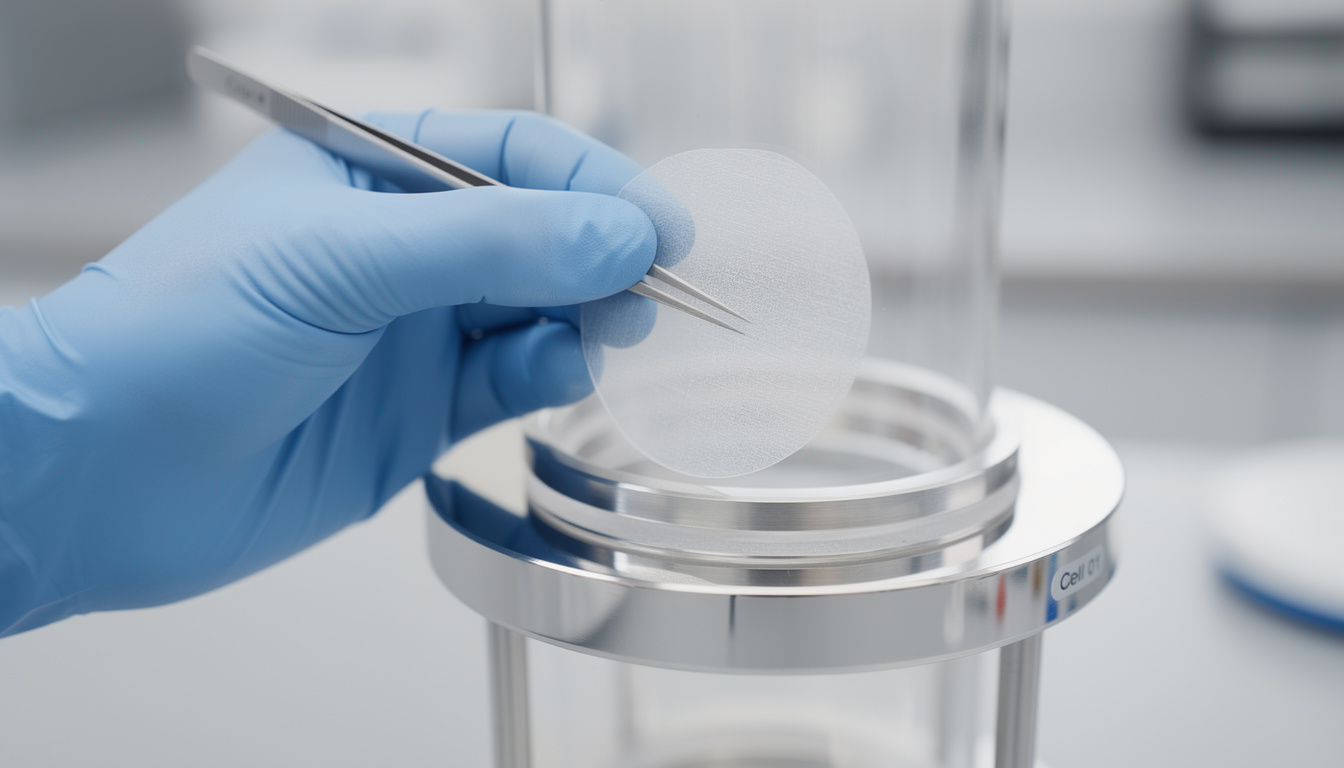
Formulation-dependent membrane choice reflects the reality that vehicle properties change transport rates independently of the active ingredient itself. A membrane for topical formulation testing must withstand the chemical environment of the specific physical form being evaluated without degrading, dissolving, or changing its pore geometry during the run. Solvent content, pH, and viscosity all interact differently with membrane materials, and a transdermal formulation that performs well with one membrane type may produce misleading results with another.
For additional details, you can visit the business website at: databiotech.co.il.
Selecting membranes for gels, creams, and ointments
Semi-solid formulation testing often involves organic solvents or complex emulsions that can interact chemically with certain membrane polymers. Membrane choice for semi-solids must account for how highly viscous vehicles interact with porous support matrices, since thick formulations can clog pores or spread unevenly across the membrane surface, distorting the apparent release rate.
Selecting membranes for transdermal patches and liquid solutions
Patches and liquid systems present a different challenge, as they may cause rapid membrane wetting soon after application. A transdermal permeation model built around these physical forms needs to maintain realistic diffusion kinetics without premature formulation depletion, since a membrane that saturates or empties too quickly will not represent the sustained release profile expected in real topical formulation use.
What are the common pitfalls in membrane selection and assay setup?
Experimental variables, physical setup errors, and compatibility issues can all compromise assay validity long before any data reaches analysis. Early-stage method development is the appropriate stage to identify and eliminate systematic errors, since correcting a flawed protocol after a full formulation screening run has already produced misleading data is both costly and time-consuming.
Managing membrane compatibility and physical interaction risks
Membrane swelling, pore blocking, and chemical degradation caused by harsh excipients are physical signs of poor membrane compatibility that should prompt immediate reassessment of the chosen material. Active ingredients can also bind to the membrane itself, a membrane-formulation interaction that leads to poor analytical recovery in the receptor fluid and understates the true permeation rate.
Standardizing experimental factors to ensure reproducibility
Checking physical membrane integrity before starting the assay run is a basic but frequently skipped protocol step. Maintaining strict sink conditions in the receptor medium, regulating temperature precisely, and avoiding trapped air bubbles beneath the membrane surface are all necessary to keep a franz diffusion cell run within acceptable variability limits.
Membrane selection at a glance
| Testing goal | Preferred membrane type | Key requirement |
|---|---|---|
| IVRT (release testing) | Non-rate-limiting synthetic membrane | High porosity, low affinity for active |
| IVPT (permeation testing) | Biologically relevant or skin-mimicking membrane | Resistance matching real tissue |
| Semi-solid formulation screening | Chemically resistant synthetic membrane | Stability against solvents and emulsions |
| Transdermal patch evaluation | Synthetic or skin surrogate membrane | Controlled wetting, no premature depletion |
Further comparative data on regional regulatory expectations for membrane selection would benefit from additional research drawn from neutral academic sources, since guidance varies across markets and continues to evolve.
What is the difference between IVRT and IVPT membranes?
IVRT membranes are chosen to be non-rate-limiting, meaning they should not slow drug release, while IVPT membranes are selected to be biologically relevant so that they mimic real tissue resistance.
Can synthetic membranes fully replace biological skin?
Synthetic membranes offer better reproducibility and availability but cannot fully replicate the lipid-protein structure of biological skin, so the choice depends on the specific study objective.
What causes poor analytical recovery in a Franz cell study?
Poor recovery often results from active ingredient binding to the membrane material, pore blocking, or insufficient sink conditions in the receptor medium.
Why does membrane choice change the permeability coefficient?
The permeability coefficient is calculated from flux and concentration data, both of which shift depending on how permissive or restrictive the chosen membrane is toward the active compound.
About the Business
Da-Ta Biotech operates as a biological research and development contract laboratory, offering in vitro R&D services, cell-based assays, and biological laboratory testing to biotech, pharmaceutical, and medical device companies across Israel. The organization also serves as Israel's leading importer and technical supplier of state-of-the-art laboratory testing equipment, analytical instruments, and diffusion systems used in permeation and release studies. Its work supports pharmaceutical, cosmetic, and biotechnological organizations that require reliable physical testing solutions backed by deep technical expertise in formulation and membrane science.
